The project
Digital Collection on Swahili History and Culture in Northern Mozambique: Experiences of Social Inclusion Through the Teaching of History, Culture, and Digital Media (Brazil-Mozambique)
The main objective of this project is to conduct research on the history and Swahili culture of northern Mozambique. It also aims to explore how research and teaching on African history and cultures, as well as the cultural heritage of historically marginalized populations, can serve as strategies for promoting social inclusion in Brazil and Mozambique. In this regard, the project aims to contribute to the creation of more inclusive universities and academic research, fostering the participation of professors and researchers in the formation of groups interested in promoting social inclusion in Brazil and Mozambique. Thus, the research focuses on intercultural education, particularly on teacher training and the teaching of African history in universities and schools, with the aim of implementing Laws n. 10.639/2003 and n. 11.645/2008 in Brazil.
The societies studied in this research are located in the territory that today forms part of the provinces of Nampula and Cabo Delgado, in northern Mozambique. The populations that inhabited the coastal part of this region were called Swahilis. Swahili is a Bantu word, derived from the Arabic word “sahil”, which means shore, coast, or even trading port. As an ethnic term, “Swahili” was first used by the Omanis when they settled in the Sultanate of Zanzibar in the early 19th century. They employed this ethnonym to geographically designate the coast of East Africa, the people living there, and their language. At that time, the term Swahili took on a pejorative connotation. The meaning of the word “Swahili” as “shore” was linked to the social and political status of these populations, with the assertion that they were also on the margins of Arab societies and Islamic culture. The Islam practiced by the Swahilis, of the Sunni-Shafi’i school (unlike the majority of Omanis, who were Ibadis), was marked by local African beliefs and, for this reason, considered heterodox and “contaminated.”
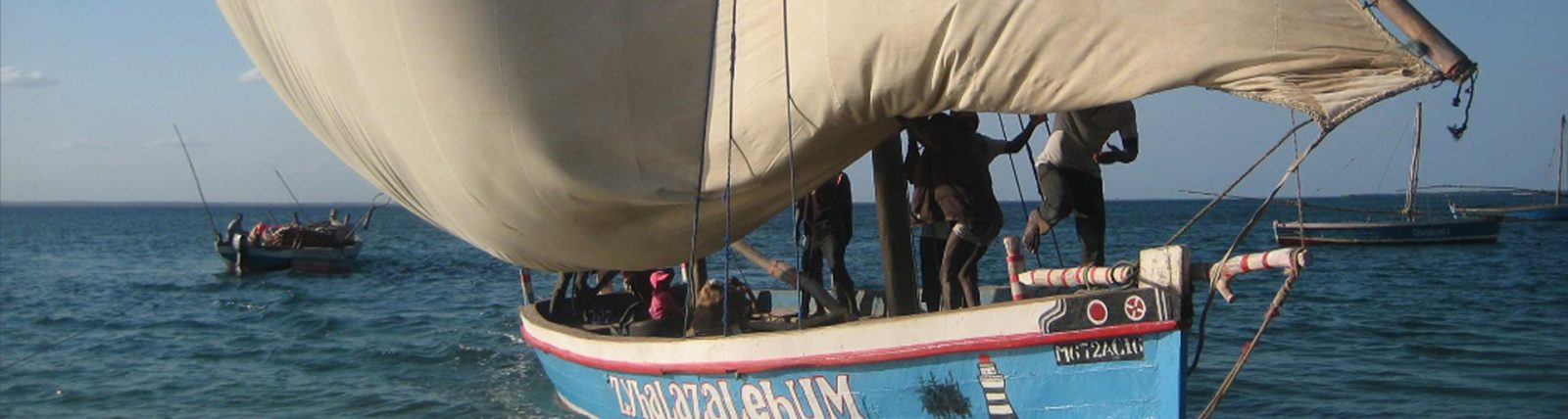
Northern Mozambique has historically been one of the most important regions in East Africa. Until the end of the 19th century, it was a major meeting point for trade caravans coming from the interior of the African continent and for merchants from across the Swahili Coast and from more distant regions such as the Persian Gulf and China. As an integral part of international trade networks and Islamic religious exchanges spanning the Indian Ocean region, northern Mozambique was characterized by the intense flow of people, goods, ideas, and knowledge, becoming a true sociocultural mosaic.
Swahili societies along the northern coast of Mozambique maintained political, economic, and cultural connections with interior societies—most notably those known as the Makua—which meant that no rigid boundaries existed between them. These historical ties remain evident today in certain forms of social organization and cultural expression. In the past, the town of Pangane in Cabo Delgado province, as well as the islands of Angoche and Mozambique in Nampula province, served as major Swahili political, cultural, and economic hubs. Over the course of a history shaped by the intense slave trade, the subsequent imposition of the Portuguese colonial system, and the process of gaining independence, the Swahili people of Mozambique have faced various forms of marginalization and social exclusion.
It is important to emphasize that this project also aims to understand the transformations brought about by various historical processes that led to the marginalization of different groups. In this regard, to understand the current situation of the Suailis in northern Mozambique, it may be worthwhile to consider the experiences and reflections already undertaken in Brazil regarding the processes of exclusion and inclusion of certain social groups, such as people of African descent. Reflecting on the importance of education, expanding access to information through digital media, promoting the production of knowledge, and valuing history and culture as strategies for full social integration and the exercise of citizenship are the overall objectives of this project.